

Losing a tooth can affect more than just your smile—it can also impact your jawbone health. While many people replace missing teeth for cosmetic reasons, there’s an essential medical reason to do so as well: preventing bone loss. Among all tooth replacement options, dental implants are the only solution that can actually preserve and stimulate the jawbone after tooth extraction.
In this blog, we’ll explore how dental implants help prevent bone loss, why this matters, and what makes them the best long-term solution for missing teeth.
What Happens to the Jawbone After Tooth Extraction?
When a tooth is extracted or lost, the root of the tooth—which used to stimulate the jawbone through chewing—is no longer there. Without this natural stimulation, the bone in that area begins to resorb (shrink) over time.
- Within the first year after tooth loss, up to 25% of bone volume can be lost.
- Over the next few years, the bone continues to deteriorate, which can cause:
- A sunken facial appearance
- Difficulty wearing dentures
- Shifting of nearby teeth
- Bite misalignment
Once bone loss begins, it becomes harder to replace the tooth effectively—especially if too much bone has disappeared.
How Dental Implants Help Preserve Bone
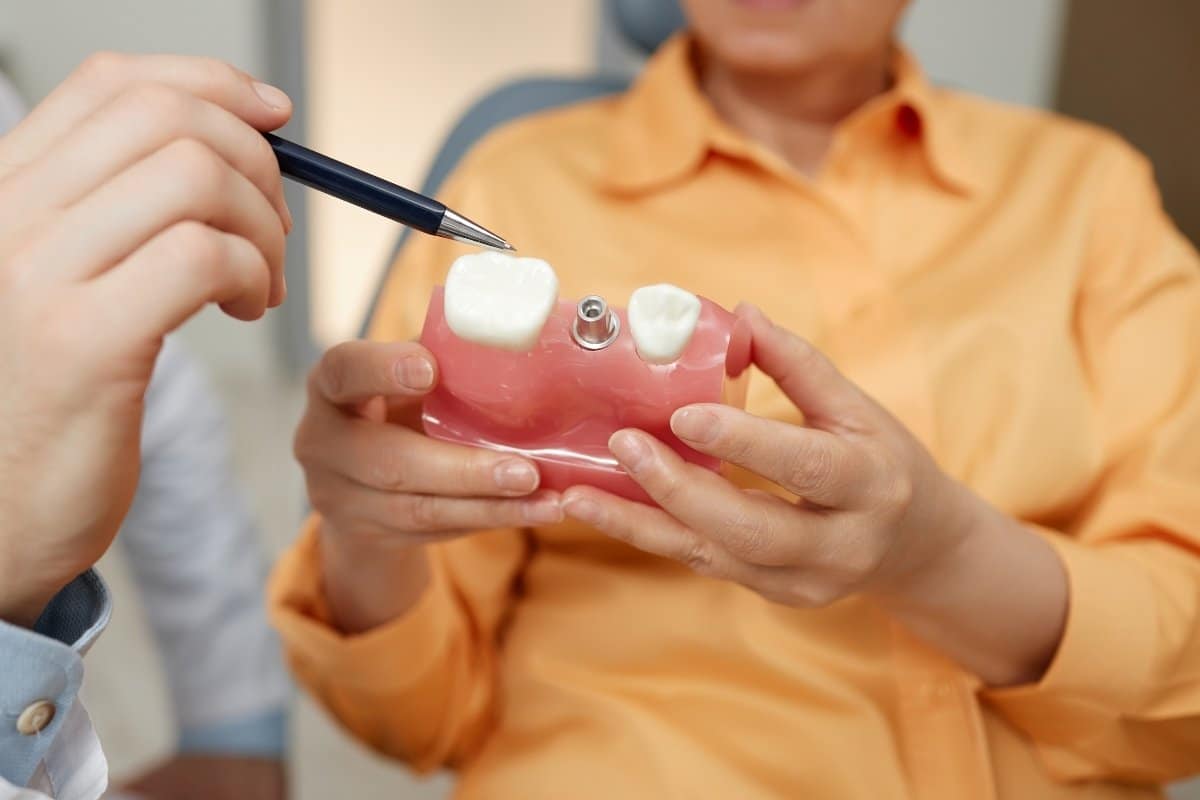
A dental implant is a titanium post surgically placed into the jawbone to act as an artificial tooth root. Unlike bridges or dentures that rest on the gums, implants integrate directly with the bone through a process called osseointegration.
Here’s how that helps:
- Stimulates Bone Growth:
The implant mimics a natural tooth root. When you chew, the implant transfers pressure to the bone, which keeps it active and healthy—just like a natural tooth would. - Prevents Bone Resorption:
Because the jawbone continues to receive stimulation, the bone does not shrink or deteriorate over time. - Maintains Facial Structure:
By preserving bone mass and density, dental implants help maintain the natural shape of your face and jawline, preventing the “sunken” look that often comes with missing teeth. - Supports Surrounding Teeth:
Replacing a missing tooth with an implant prevents adjacent teeth from shifting out of place, helping maintain a stable bite and balanced alignment.
Why Dental Implants Are Better Than Other Tooth Replacement Options
While dentures and bridges can replace missing teeth, they do not replace the tooth root—which means the jawbone still lacks the stimulation it needs. Over time, bone loss can still occur underneath these restorations.
In contrast, dental implants:
- Fuse with the bone for permanent stability
- Offer natural function and aesthetics
- It can last a lifetime with proper care
- Preserve bone and prevent facial collapse
The Best Time to Get a Dental Implant
Ideally, a dental implant should be placed soon after tooth extraction—before significant bone loss occurs. However, if bone loss has already happened, bone grafting can often rebuild enough structure to support an implant successfully.
Your dentist or oral surgeon will evaluate your bone health using advanced imaging to determine the right treatment plan.
Maintaining Bone Health After Dental Implants
After getting dental implants, maintaining healthy habits is crucial for long-term success:
- Practice good oral hygiene (brushing and flossing daily).
- Schedule regular dental checkups and cleanings.
- Avoid smoking, as it can interfere with bone healing and implant integration.
- Eat a balanced diet rich in calcium and vitamin D to support bone health.
Dental implants do much more than replace missing teeth—they protect your jawbone and preserve your facial structure for years to come. If you’ve had a tooth extracted or are considering one, talk to your dentist about how dental implants can help prevent bone loss and restore your confident smile.
Ready to restore your smile and protect your bone health?
Schedule a consultation today to learn how dental implants can give you a strong, healthy, and lasting solution after tooth loss.