
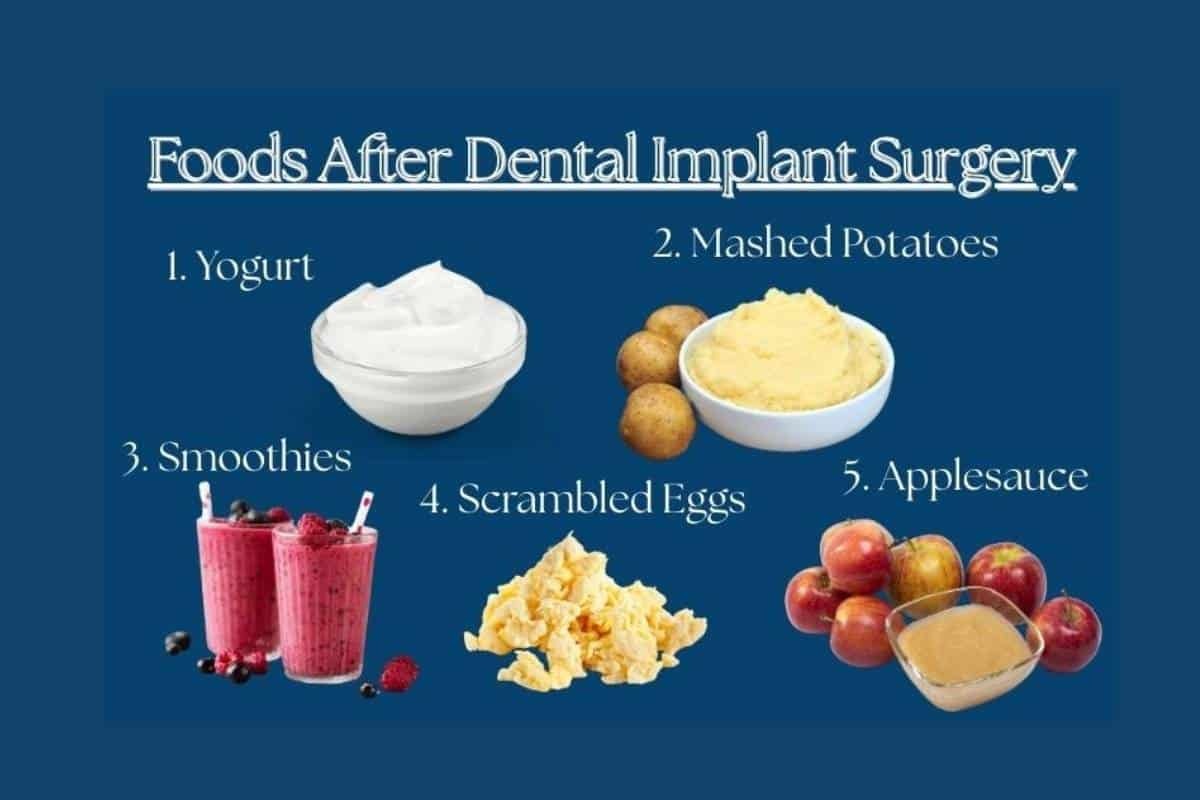
Dental implants are one of the most advanced and reliable solutions for replacing missing teeth. Whether you’re restoring a single tooth or undergoing full-mouth reconstruction, implants can dramatically improve your smile, confidence, and ability to eat comfortably. However, the success of your treatment depends heavily on how well you follow post-surgical care—especially your diet.
Eating after dental implant surgery isn’t just about comfort it’s essential for proper healing and successful osseointegration (the process where the implant fuses with your jawbone). This complete, stage-by-stage guide will help you understand exactly what to eat and avoid at each phase of recovery.
Stage 1: Immediately After Surgery (First 24-48 Hours)

Dietary Guidelines
The first 24 to 48 hours are the most sensitive period following your dental implant procedure. Your mouth needs time to begin healing, and disturbing the surgical site can lead to complications.
- Stick strictly to liquids and ultra-soft foods
- Keep foods lukewarm (avoid hot temperatures)
- Stay hydrated, but drink carefully
What You Can Eat
Liquids:
- Water
- Milk
- Protein shakes
- Clear broths
Soft Foods:
- Applesauce
- Yogurt
- Pudding
- Gelatin
- Mashed potatoes
Important Tips
- Avoid hot and spicy foods – they can irritate the surgical area
- Do not use straws – suction can dislodge the blood clot and delay healing
- Rest and elevate your head to minimize swelling
Stage 2: First Week Post-Surgery
Dietary Guidelines
As swelling and discomfort begin to decrease, you can slowly introduce soft, solid foods. The key is minimal chewing and avoiding pressure on the implant site.
What You Can Eat
- Scrambled eggs
- Mashed bananas
- Oatmeal
- Cottage cheese
- Soft pasta
- Well-cooked vegetables
- Smoothies with protein
- Pureed soups
Important Tips
- Chew on the opposite side of your mouth
- Maintain excellent oral hygiene, but be gentle near the implant
- Continue avoiding crunchy, hard, or sticky foods
Stage 3: Two to Six Weeks Post-Surgery
Dietary Guidelines
By this stage, your healing is progressing well. You can begin adding semi-solid foods that are easy to chew but still gentle on your implants.
What You Can Eat
- Soft meats (ground beef, shredded chicken, boneless fish)
- Steamed vegetables (carrots, zucchini, squash)
- Soft fruits (peaches, pears, avocados)
- Grains (soft rice, quinoa, couscous)
Important Tips
- Monitor for pain, swelling, or sensitivity
- Focus on a balanced diet rich in protein, vitamins, and minerals
- Avoid foods like nuts, chips, or crusty bread
Stage 4: Two to Six Months Post-Surgery
Dietary Guidelines
At this stage, your implants are undergoing deeper integration with the jawbone. You can begin to reintroduce firmer foods, but caution is still important.
What You Can Eat
- Tender meats, tofu, and tempeh
- Cooked greens and roasted vegetables
- Apples (cut into small pieces)
- Whole wheat bread (lightly toasted)
- Brown rice and whole-grain pasta
Important Tips
- Start chewing evenly on both sides
- Continue avoiding extremely hard foods
- Attend all follow-up dental visits to monitor healing
Stage 5: Long-Term Maintenance (Six Months and Beyond)
Dietary Guidelines
Once your dentist confirms successful osseointegration, you can return to a normal, balanced diet.
What You Can Eat
- Lean proteins
- Fresh fruits and vegetables
- Whole grains
- Dairy products
Important Tips
- Avoid chewing ice, hard candies, or non-food objects
- Maintain excellent oral hygiene
- Schedule regular dental check-ups
Why Your Diet Matters After Dental Implants
Your diet directly impacts how quickly and effectively your implants heal. Nutrient-rich foods support tissue repair, reduce inflammation, and strengthen bone integration. Poor dietary choices, on the other hand, can lead to complications such as implant failure or infection.
A thoughtful approach to eating ensures the following:
- Faster healing
- Reduced discomfort
- Long-term implant success
- Improved overall oral health
Conclusion
Eating after dental implant surgery requires patience, planning, and gradual progression. Each stage of recovery comes with its own dietary guidelines designed to protect your implant and promote healing. By following these steps and listening to your dentist’s advice, you can enjoy a smooth recovery and long-lasting results.
If you have questions about your recovery diet or need personalized guidance, schedule an appointment today with the experts at Palms Dental Care. Conveniently located in Lake Worth, our team provides compassionate, customized care to help you achieve a healthy, confident smile. Visit us at 8918 Lantana Rd B, Lake Worth, FL 33467, and take the next step toward optimal oral health.
FAQs
How long after dental implants can I eat normally?
Most patients can return to a normal diet after 3 to 6 months, once the implant has fully integrated with the jawbone.
Can I eat rice after dental implant surgery?
Yes, soft rice can be introduced in the 2-6 week stage, as long as it’s well-cooked and easy to chew.
What foods should I avoid after dental implants?
Avoid hard, crunchy, sticky, and spicy foods such as nuts, chips, caramel, and hot soups during the early healing stages.
Is it okay to drink coffee after dental implant surgery?
It’s best to avoid hot coffee for the first 48 hours. After that, you can have lukewarm coffee in moderation.
Why can’t I use a straw after dental implant surgery?
Using a straw creates suction, which can dislodge the blood clot and delay healing or cause complications.